
What Should a Good Webflow Website Cost?

Estimating the cost of a Webflow website probably feels harder than it should. The website build quotes you've been collecting likely range from suspiciously cheap to alarmingly large, with no obvious explanation for the gap.
Most pieces on Webflow website cost either pluck a number out of thin air or give you a range so wide it’s meaningless. Neither is much help if you’re putting together a brief with a budget you'd like to spend wisely.
We'd rather you walked into the conversation (ours or anyone else's) knowing what to expect. This is a guide to what good Webflow work tends to cost and, just as importantly, what your site should be earning back.
How much does a Webflow website cost?
The truth is, nobody can accurately quote a website project after a quick “15 min free strategy call”.
If someone can, they’re either guessing very confidently or selling you a site they've already built and they’d quite like to use that template again. So, a caveat before the numbers: these are guides, not promises.
For a considered, well-built Webflow site, the market tends to look like this:
- Landing page: £2,000 - 4,500
- 5 - 10 page site: £6,000 - 10,000
- 10 - 20 page site: £10,000 - 16,000
- 20 - 30+ page site: £16,000 - 35,000+
Webflow website redesign cost estimate
If you're looking at a Webflow website redesign rather than a new build, the same tiers broadly apply. A redesign of an existing 10-page site tends to sit in the £10,000–16,000 range, depending on whether you're keeping the existing structure or restructuring.
A redesign costs similarly to a new build for a few reasons. You're working around existing content, existing URLs, and existing search equity. Webflow website redesign cost estimate pricing should always account for content auditing, URL mapping, and a clear plan for what's being kept, cut, rewritten, or redesigned.
What drives a Webflow website design cost up
There are five variables that do most of the work in shaping your quote. Knowing what they are helps you scope the brief properly and read a proposal critically:
1. Animation complexity
Scroll-triggered animations, Spine animations (rigged character or illustration work), and custom micro-interactions all take time to build. This is one of the biggest drivers of your Webflow website design cost, and the one most often underestimated.
2. Pages and templates
Not just how many pages exist, but how many unique layouts are required. Ten pages built on two templates is a different job to ten pages each needing a unique design. The template-to-page ratio is one of the fastest ways to tell where a quote came from.
3. CMS items
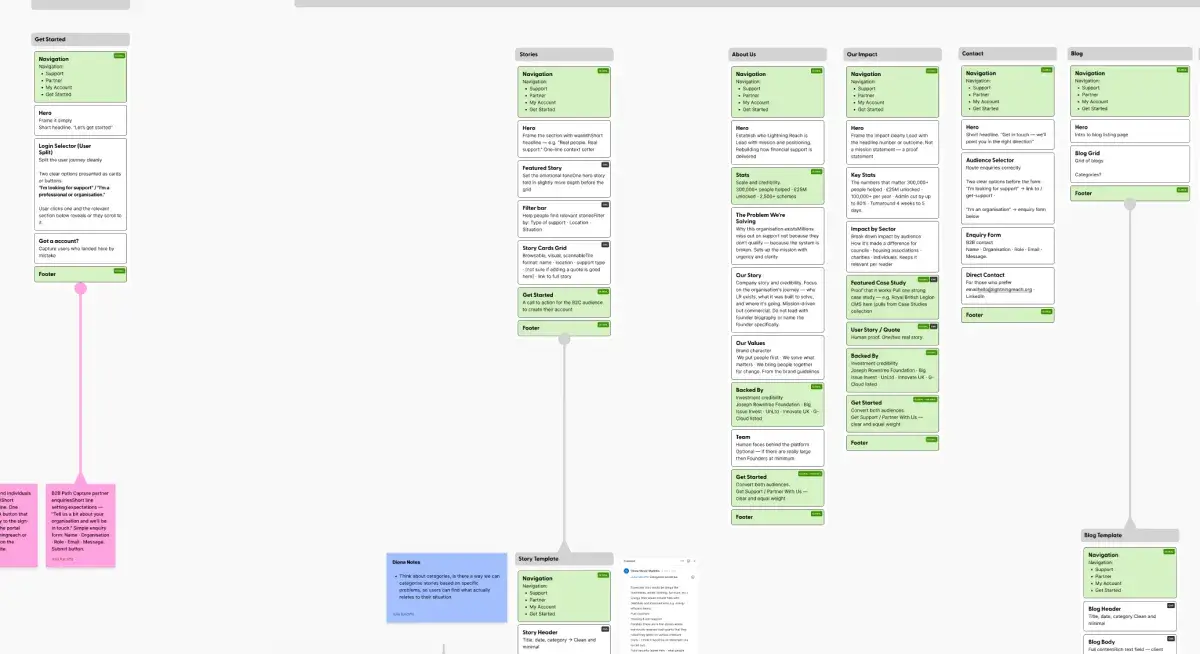
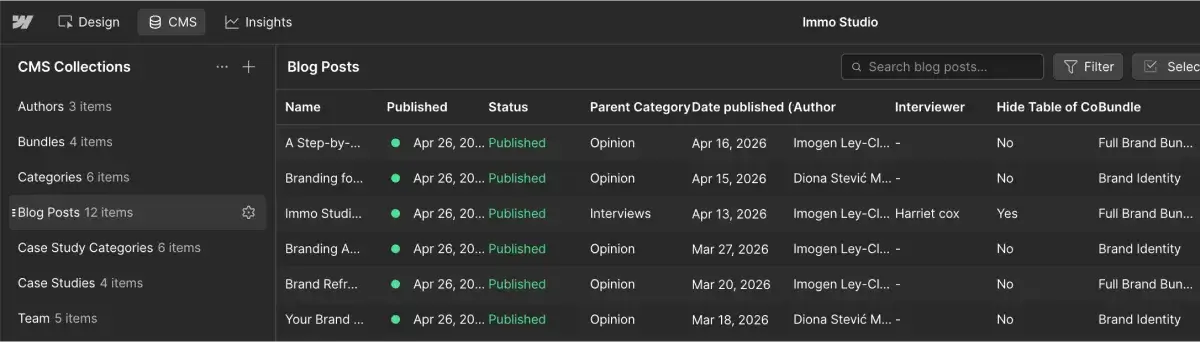
The more blogs, case studies, team pages, or product listings you have, and the more complex the relationships between them (filtering, tagging, related content), the more build time is needed.
CMS planning is one of the parts most commonly underscoped, and one of the most painful to fix after launch.
4. Integrations
Connecting to CRMs, booking tools, email platforms, or custom APIs adds time, and occasionally specialist development.
A few standard integrations are routine, but a custom integration with a third-party tool that has no native Webflow connector will be quoted as such.
5. Build from scratch vs migration
This might be surprising, but migrating an existing site from WordPress or another platform is usually more expensive than building fresh.
Why is a Webflow website migration cost higher?
If you're moving from another platform, your Webflow website migration cost has to cover work that doesn't exist in a new build, including:
- A content audit
- A redirect strategy
- A careful approach to URL structures
Done well, traffic should be protected, and often improves after migration. Done in a rush, rankings drop (sometimes spectacularly) and they're slow to forgive you. This is why in-depth planning is so important before any design starts.
What's included (and what usually isn't)
A good proposal should be specific about what's in scope and what isn't. Typically in:
- Existing site audit
- Discovery
- Sitemap
- Wireframes
- Design
- Development
- Basic SEO setup
- CMS structure
- Launch
Photography, illustration, video production, ongoing maintenance, third-party tool subscriptions, Webflow's own hosting plans, and, surprisingly often, copywriting are often not included.
We include copywriting as standard. It's so tightly bound to the site’s performance that handing it off elsewhere feels a bit like building a house and leaving the windows out. Sure, you can do it, but you’ll be paying for them later.
Website ROI: what should a Webflow site return?
A properly built site should earn its keep through three things:
- Better conversion: Clearer messaging, faster pages, and an easier user journey usually move conversion rates.
- Stronger search performance: A well-structured site with good copywriting, clean URL architecture, and Webflow's natural speed advantage tends to rank better than the equivalent on a heavier CMS.
- Credibility with the right buyers: Your site is doing positioning work before you ever speak to your clients or customers. A site that signals credibility wins business that a tired one might lose.
Good ROI website design is the result of thinking about commercial outcomes from the sitemap onward: what each page is for, who it's speaking to, and what it's asking them to do.
A good website is mostly good decisions
There are plenty of ways to build a website. Most of them work well enough.
Fewer of them make it easier for the right people to understand what you do, trust you, and take action. That's the difference between assembling pages and making sound decisions.
If you'd like more on choosing the right team for the job, our piece on choosing a Webflow development agency covers what to look for, what to ask, and what to walk away from. For everything else, book a call and let’s talk it through.
Why do Webflow website costs vary so much?
Is Webflow more expensive than WordPress?
How much does a Webflow website redesign cost?
What is usually included in a Webflow website project?
How long does it take to build a Webflow website?
Is Webflow a good option for growing businesses?