
The True Cost of an Outdated Property Website

Most people see your site long before they see your property and often, their mind is made up before you know they’re looking.
Credibility forms fast. It takes split seconds for a user to decide whether your website is trustworthy, and in that time they’re subconsciously scanning everything from your layout and typography to tone of voice and visual hierarchy.
Before they’ve spoken to your team or visited the space, your audience already has a sense of who you are based on your website. In that moment, it becomes a stand-in for your entire business. If it feels dated, that’s the impression that sticks.
Is your property website saying what it should? In this article, we explore how an outdated website hurts trust, and the ways it can distort how your business is perceived.
It reduces enquiry volume and quality
When a website feels dated, unstructured, or just a bit off, users don’t get in touch. Or worse, the wrong ones get in touch while the right ones move on.
In property, enquiries aren’t casual. Someone has taken time to review your offer, consider the location, and check the fit. If they drop off before making contact, it’s rarely because they suddenly lost interest. It’s because your site didn’t give them enough reason to act.
We’ve seen how quickly the friction adds up:
- Outdated visuals
- Inconsistent branding
- Language that doesn’t match the audience (B2B vs. B2C)
- Poor mobile performance
- No clear call to action
- Slow load times
A professional property website makes it easy for the right people to take the next step. That means using language your audience recognises, selecting high quality photography, and removing friction from the process.
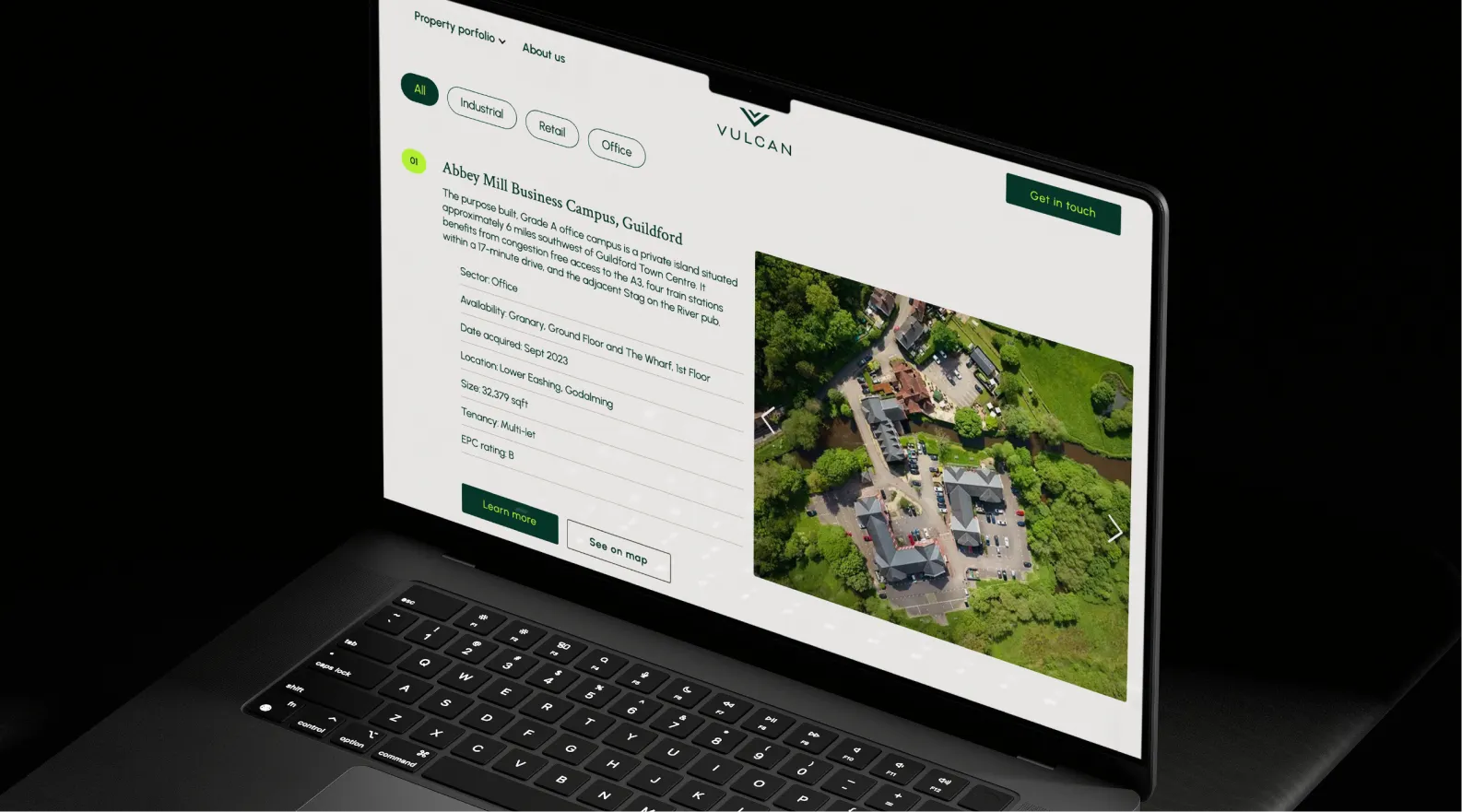
The work we did with Vulcan Properties showcases that balance in action. Each asset is presented with a clear structure, beautiful photography, and a clean split between narrative and listing details. Users can scan for sector, location, availability and size in seconds, or go deeper if needed.
It fails to support longer decision cycles
Unlike impulse-led sectors, property requires multiple visits, deep consideration, and trust-building at every stage. Through it all, your website is either moving things forward or holding things back.
An effective property website supports that journey by giving users the information they need to make a decision. That means more than just good design. It means:
- Clarity of purpose: What the user is here to do
- Depth of content: Structured for both surface and deep exploration
- Ongoing updates: Showing activity and relevance
- Consistent tone and identity: Building recognition over time
Are you showcasing knowledge of your audience’s world? Are you anticipating their questions? Is the information accurate and useful to their decision-making process?
This aerial map on Abbey Mill’s website gives users a clear understanding of how the campus is structured. The location, layout, and road connections are all visible at a glance, allowing users to take in critical information quickly.
A site that lacks this kind of depth can feel generic. It’s fine for a quick glance, but unconvincing in the context of serious decisions.
The true test of property website credibility is how your site holds up when someone’s choosing whether to trust you with time, capital, or space, especially when they’re weighing up options over weeks or months.
It undermines the perceived value of your portfolio
Presentation won’t fix a weak portfolio, but it can absolutely weaken a strong one.
If your photography is poor, your branding is outdated, or the website layout feels templated, even prime assets can feel devalued. That perception carries extra weight when users are comparing multiple opportunities side by side.
The best property websites provide key information around scale, location, availability, and specifications without overloading the page. They balance strong imagery with useful content. And they make it easy for the audience to find what they’re looking for.
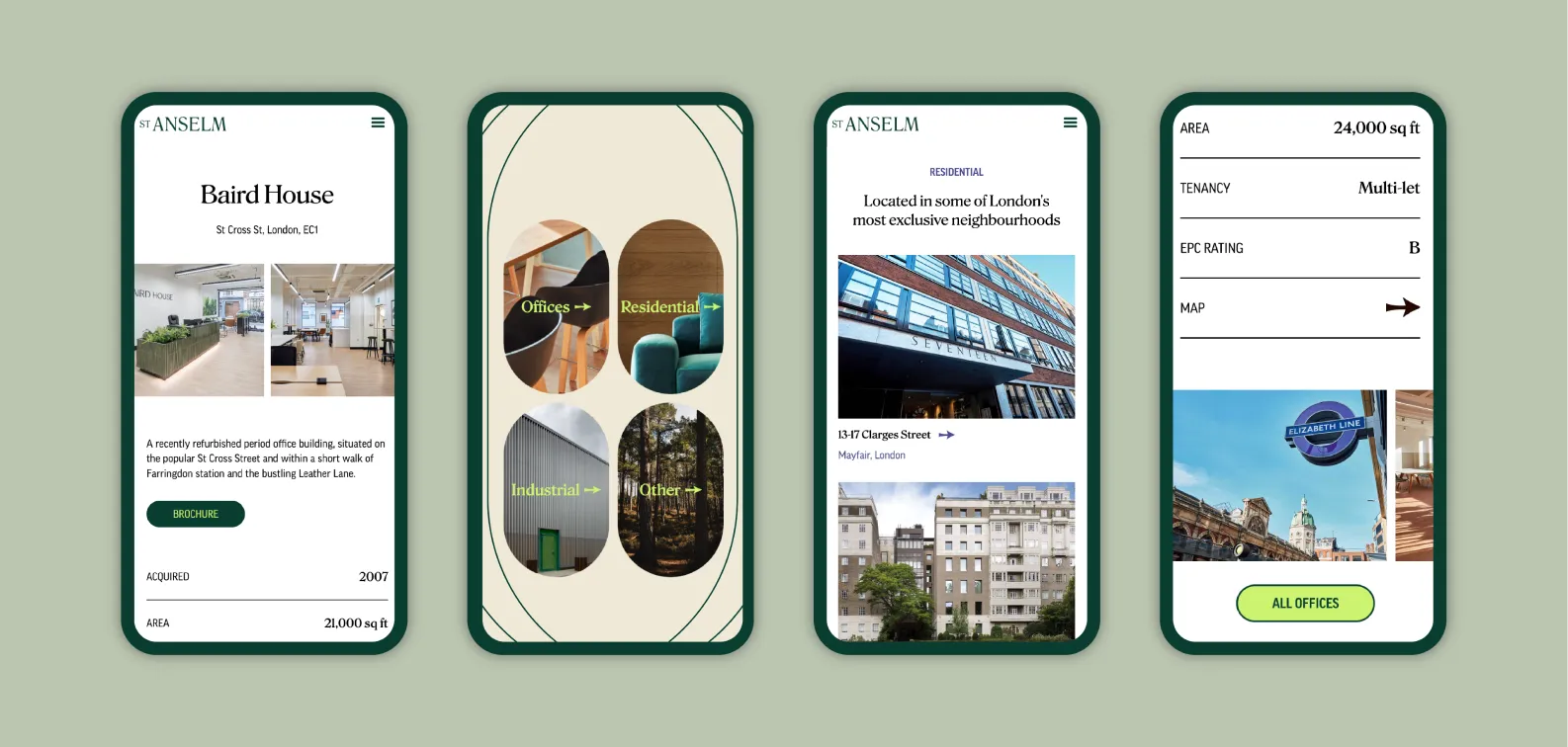
In this example from St Anselm, we used design to guide the user through their portfolio using clean composition, high quality imagery, and modern typography. Each image acts as an entry point that helps visitors understand their diversity without needing to dig for information.
It suggests deeper issues
An outdated website can trigger broader doubts about your business. Users might not consciously realise it, but they’re constantly picking up signals: Is this team on top of the details? Are they still active? Would they respond if I got in touch?
We’ve seen this time and again: a website that hasn’t been updated in years raises red flags about the business behind it. We know that’s not always the case. Internally, you might be growing, closing deals, or have new developments underway. But if the external expression of that activity is absent, trust starts to erode.
It’s a version of the “broken window theory”, where small signs of neglect invite larger assumptions about how you manage assets and run operations. The good news is that these assumptions can be reversed with proper real estate website branding that puts the right signals back in place.
A strong portfolio deserves a strong digital presence. If your website isn’t reflecting the business you’ve built, it might be time for a closer look. If you want to explore what that could mean for your brand, we’d love to chat.
How can an outdated property website affect enquiries?
Can a presentation influence how a portfolio is perceived?
What are common signs a property website needs updating?
Does updating a website always mean starting again?