

Healthtech Branding: How Growing Startups Build Trust and Credibility

In healthtech, you can build something groundbreaking and still struggle to gain user trust. Because for most users, credibility isn’t rooted in clinical outcomes. It’s shaped by brand behaviour and the story you tell along the way.
This can get complicated because healthtech branding doesn’t follow the usual launch tempo. Regulation, clinical trials, and layers of approval stretch timelines and in that time, the product might evolve or the audience may shift. By the time your brand is ready to launch, it can feel outdated.
For founders navigating this space, brand clarity is a strategic tool. It helps you stay coherent through slow cycles and fast pivots, while keeping investors, teams, and users on board.
In this guide, we’ll look at how early-stage healthtech companies can build brands that communicate trust and credibility from day one.
Start with empathy
In healthtech, users are people navigating moments of deep uncertainty. That’s why healthtech branding, at its best, is about making people feel safe and understood.
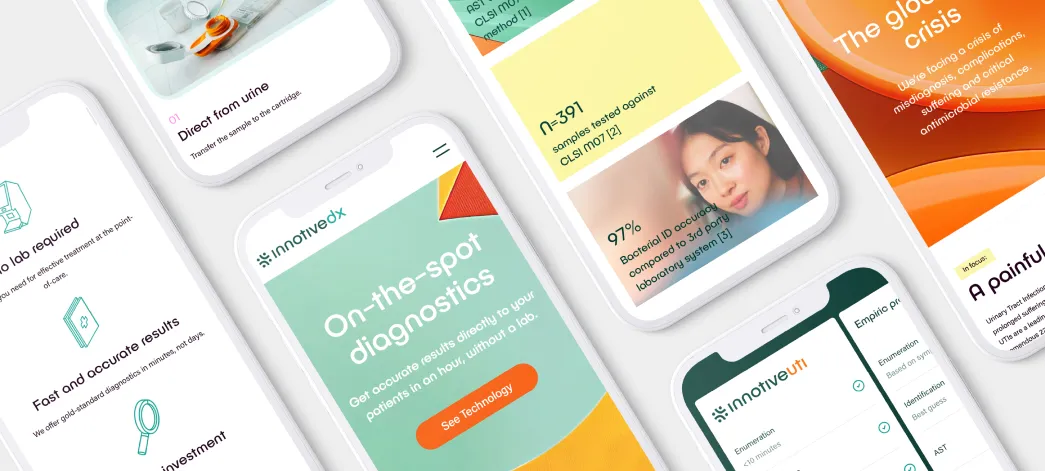
InnotiveDx, a diagnostics company, came to us as they were preparing to enter a market where “good enough” had become the norm. Clinicians were working with tools that forced compromise: fast but unreliable, accurate but expensive, or affordable but slow.
For us, cutting through meant shifting the brand conversation away from technical specs and toward human benefit. We built the brand strategy around the idea of “The Missing Piece” to position their product as something that connects speed and accuracy with a sense of resolution.
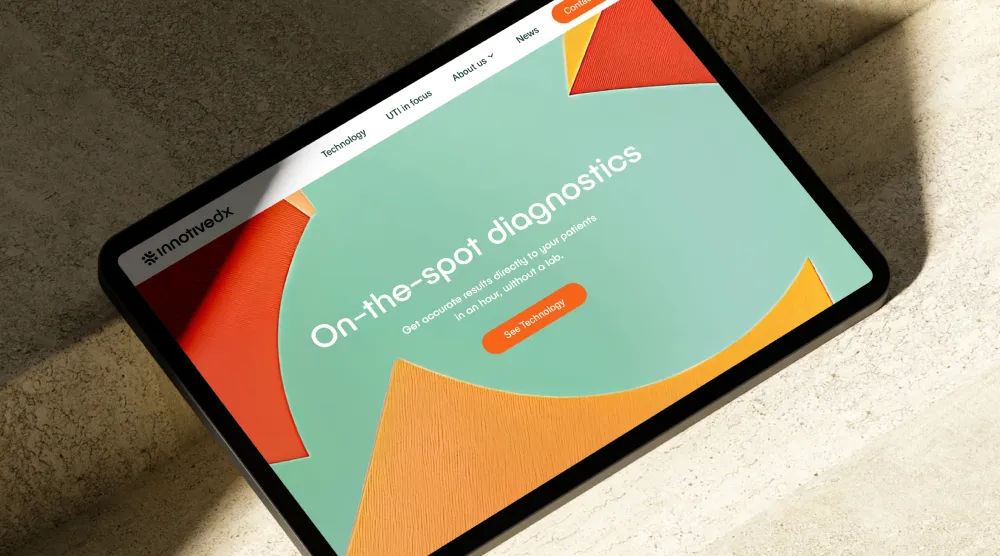
Beyond what the tech did, we focused on what it helped users feel: certainty and direction. The brand’s visual language and tone mirrored the four stages of their technology (capture, growth, imaging, analysis), creating a system that feels trustworthy.
That level of clarity comes from asking the right questions early. Here are some questions to help shape your thinking:
- What emotional state is your user in when they find you?
- What reassurance can your brand offer?
- Does your branding make your product feel more accessible, or more complex?
- Are you simply explaining your tech, or are you actually helping users believe in it?
Clarity is care
Healthtech products often involve complex systems, and that complexity needs to be communicated clearly. This doesn’t mean diluting or oversimplifying your brand, but it does mean structuring your message so it can be understood.
Users don’t need every detail, but they do need the right information, delivered at the right time, in a way that feels manageable. That’s what builds trust in your brand.
An education-led brand anticipates confusion and creates space for users to understand your product. When we work with healthcare brands, this starts with:
- Prioritising information hierarchy. Not everything is equally important. Structure your content to lead with relevance, then layer in depth.
- Using tools that support comprehension. Infographics, diagrams, short video explainers, and clear call-to-actions provide access points for users.
- Writing in an on-brand tone. Clinical accuracy is critical, but so is approachability. Your tone should reflect your users’ context and avoid unnecessary jargon.
- Designing pathways, not pages. Your UX should lead users from questions to answers, and from anxiety to action.
Make your research work for you
In this industry, credibility is currency. Founders invest years into clinical trials and peer-reviewed studies, but if that research risks getting lost if it doesn't translate into your brand.
The goal isn’t to mimic a white paper. It’s to build trust through proof that’s woven into your brand. This typically means highlighting key studies, partner endorsements, or regulatory milestones in places where users are already forming opinions, such as on your homepage or in investor decks.
Clarity in structure matters here too. A strong editorial hierarchy helps users navigate information by levels of depth:
- What do I need to know?
- Why should I trust it?
- Where can I learn more?
Good research speaks for itself, but great branding makes sure it’s heard.
Consistency builds belief

In healthtech, users are being asked to trust your product with their time, data, and body.
You can’t earn that trust if your brand shows up differently at every touchpoint. If your pitch deck looks different to your homepage, or your onboarding emails don’t match your brand tone of voice, it creates a subtle sense of doubt about whether this is something you can rely on. In a clinical context, even minor brand misalignment can feel like a red flag.
A credible brand is a consistent one. That means:
- Visuals that behave the same way across environments.
- Language that stays clear across touchpoints.
- Messaging that aligns with your strategic brand positioning.
- Brand guidelines and processes that support consistency at scale.
Every interaction reinforces (or erodes) belief. The strongest healthtech brands know this and build systems that align strategy, design, and delivery from day one.
At Immo Studio, we work with healthtech founders to build brands that can hold their shape through complexity. Whether you’re pre-trial or preparing to scale, our full brand identity package, branding services, and web design and build services are designed to support early-stage teams with credibility from the start.
How does branding build trust in the Healthtech industry?
What is an education-led brand strategy for medical startups?
How do you maintain brand consistency during long clinical trial cycles?
Why is empathy considered a strategic tool in Healthtech branding?
How can Healthtech startups translate clinical research into a brand story?
What role does UI/UX design play in building Healthtech credibility?
How should a Healthtech brand handle technical jargon?