
Your Brand Voice Comes First. AI Comes Second

There’s a growing belief that AI is flattening brand language. The logic is reasonable: everyone has access to the same tools, so everyone’s brand voice is sounding the same.
But AI isn’t necessarily flattening your brand voice. It’s reflecting what’s already there. And what’s already there is often painfully generic. If your brand tone of voice is basically “friendly, confident, premium but approachable” (a description that should be punishable by minor fines), AI will happily pump out content that feels about as inspiring as an airport lounge.
The brands that sound like themselves don’t get there by choosing a few adjectives, throwing them into ChatGPT, and calling it a day. They get there by building brand tone of voice guidelines that hold up whether the copy is written by a copywriter, a junior marketer, or an AI model.
Brand voice is a strategy decision
Your brand voice doesn’t start in a copy document. It starts in the part of the brand strategy process where you decide what kind of company you actually are.
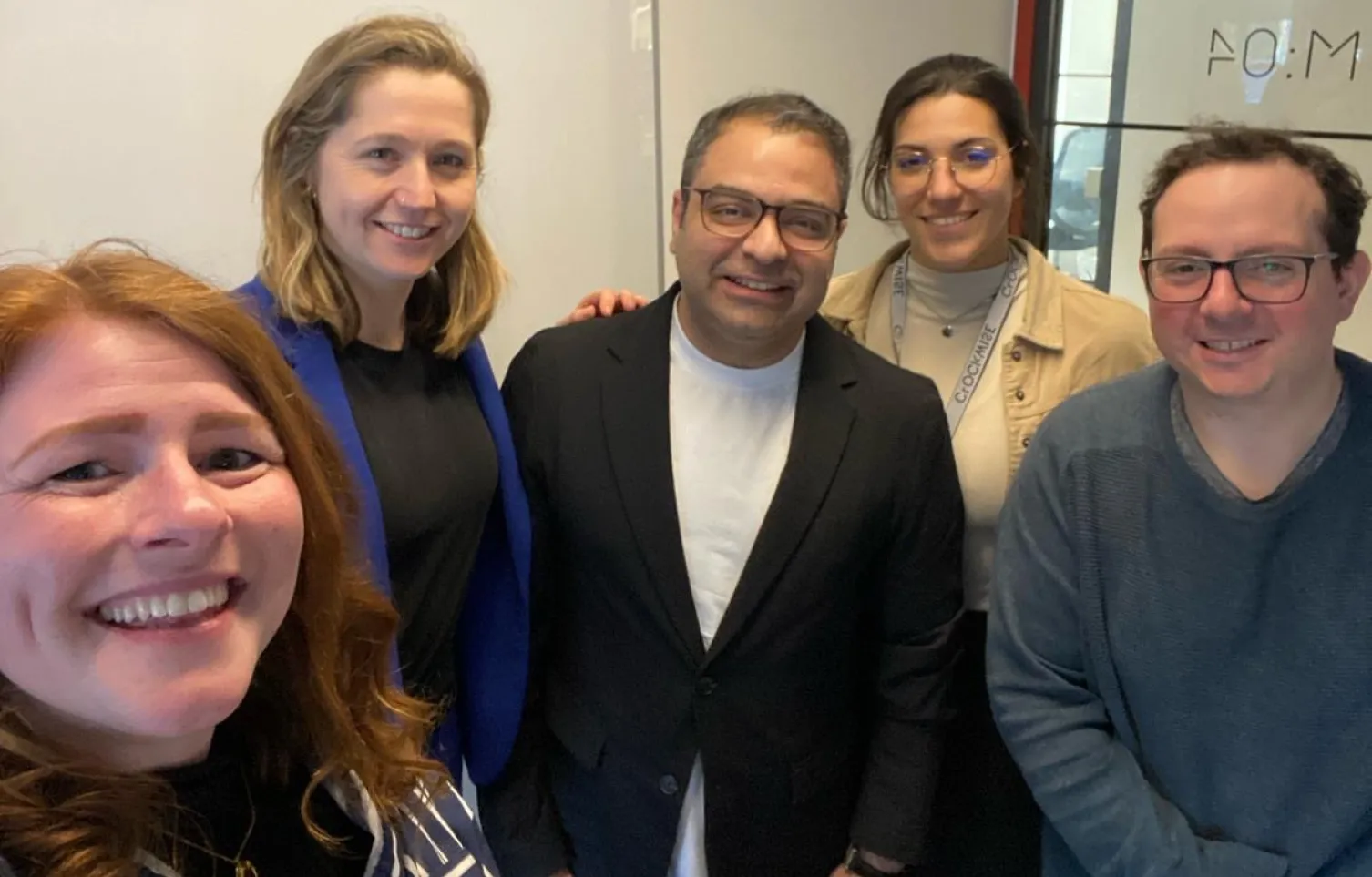
Take our client, Final Rentals. Car rental isn’t exactly a beloved category. Final Rentals looked at the entire experience and made a strategic call to be the brand that removes friction for travellers. The tone of voice brand guidelines came out of that thinking with a snappy, reassuring, and witty voice.
That resulted from answering harder questions first: what frustrates travellers about car hire, and what would the category sound like if someone finally decided not to make it complicated?
Making those decisions requires taking a position. And if you can’t answer those questions internally, how do you expect AI to?
Why AI can’t create a (good) brand voice
AI writes by predicting what comes next, which is exactly why it can’t invent a voice in any meaningful sense.
It doesn’t have taste, context, or stakes. It can’t feel the embarrassment of reading your own website and realising it sounds like a software company from 2016 that sells “solutions.”
When you ask AI to “create a tone of voice,” it does what it’s built to do: it steers toward the safest phrasing. If your foundations are vague, AI will give you vague… But faster.
When the brief gets smaller, the problem becomes clearer. Taglines, for example. A tagline carries the core of your brand. That’s why the Final Rentals tagline work started with positioning before anyone wrote a single line. The line “Here for the traveller. Always.” isn’t trying to be poetic. It’s distilling their strategy of removing friction from car hire and getting people on the road faster.
Ask AI for a tagline in that category and you’ll get something like “Your journey starts here” or “Driving your adventure forward.” Those aren’t wrong, they’re just the statistical middle of travel marketing, which is exactly the problem.
.webp)
Prompts aren’t the problem
Right now, every second LinkedIn post is about prompt engineering.
Prompt it once, prompt it twenty times, prompt it like you’re casting a spell. If you haven’t done the upfront brand work, the output will still drift back to the same phrases the internet has been recycling for a decade.
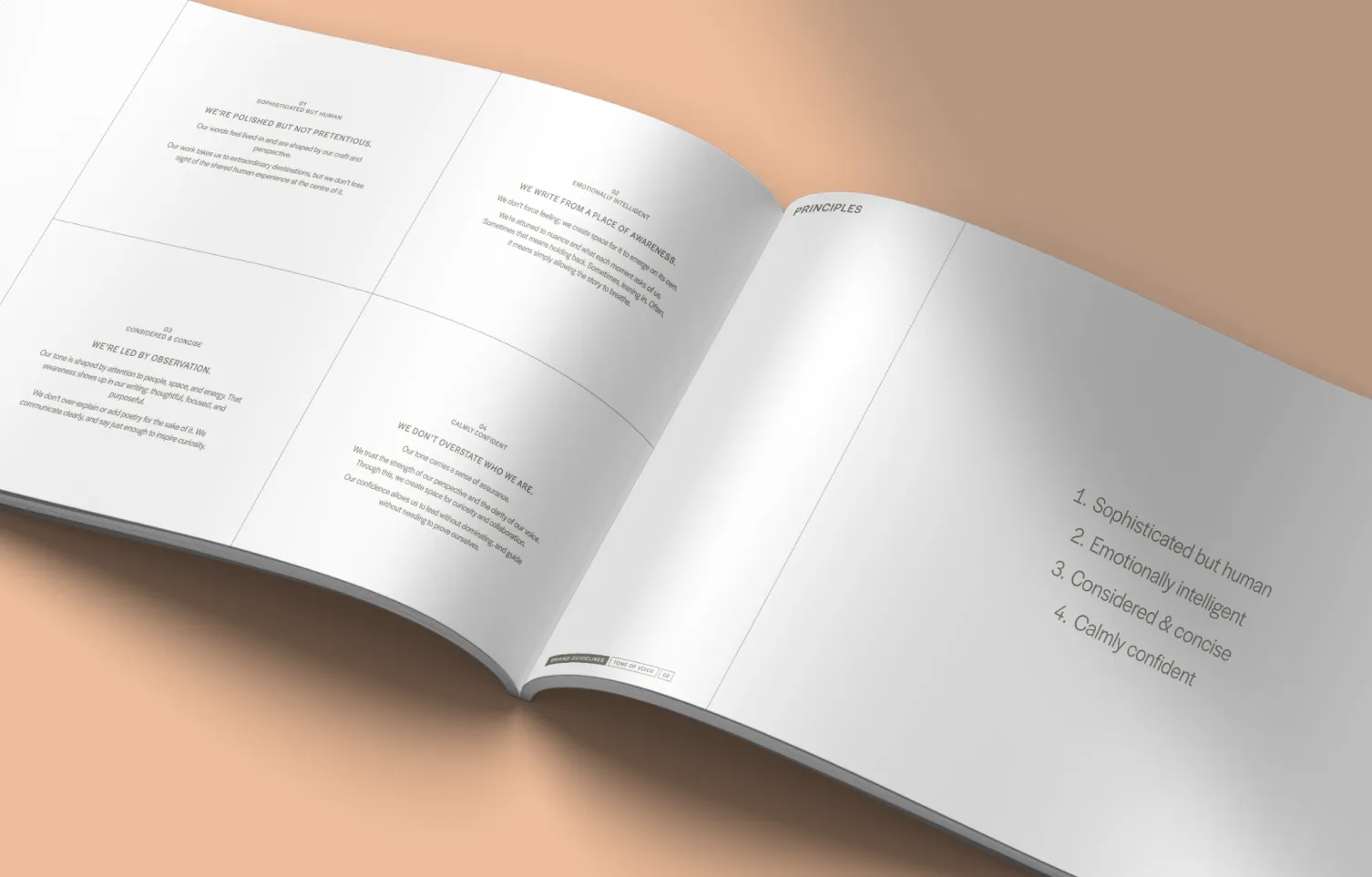
The issue isn’t the prompt. The issue is usually what you give the model to work with. If you want usable output, you need to feed the model the stuff that makes a brand a brand:
- Positioning: What you are, and what you absolutely are not
- Messaging pillars: The handful of ideas you repeat
- Vocabulary: Words you lean on, and words you never use
- Real writing: Pages, emails, or product copy that has already been approved
- Channel behaviour: How the voice shifts between communication channels
Once the voice actually exists, AI becomes genuinely useful. We’re getting great results by building “house models” using brand voice guidelines plus a stack of approved copy. Custom GPTs can do this. Claude can also do it, and for long documents and style adherence, Claude tends to behave better.
At that point, you’re not asking AI to be creative. You’re asking it to write within a system, which is exactly what it’s good at.
If you skip the system, you’ll spend your life re-prompting, rewriting, and wondering why it keeps calling your offering an “innovative solution for a fast-changing world.” After the tenth rewrite you, you might start wondering if the machine is mocking you.
It isn’t. It’s just doing what you trained it to do.
Can AI create a brand voice on its own?
Why do many AI-written brand voices sound similar?
What should be defined before using AI for brand writing?
Can AI help maintain the tone of voice across teams?
Why are taglines difficult for AI to generate well?
Is prompt engineering enough to improve brand copy?